51shangTOP

Navigation

TOOLS / FPGA

Pipeline Performance Analyzer

A browser-local Pipeline Performance Analyzer for electronic-information study and early engineering checks.

Browser-local calculationPipeline timing

Quick guide

How to use “Pipeline Performance Analyzer”

3-step guide +
  1. Enter parametersProvide values, units, or local files using the field guidance.
  2. CalculateClick Calculate to see key values, formulas, units, and model notes.
  3. Check limitsReview assumptions and limits before using the estimate in a real design.

Input

Parameters

A
Clock conditions
Hz
Enter a valid clock frequency hz in Hz. Check the result notes for model assumptions and limits.
Pipeline structure
stages
Enter a valid stage count in stages. Check the result notes for model assumptions and limits.
cycle
Enter a valid initiation interval in cycle. Check the result notes for model assumptions and limits.
Batch conditions
item
Enter a valid item count in item. Check the result notes for model assumptions and limits.

Output

Calculation result

B
Loading this tool…
Results will appear here.

Local actions

Calculated in this browser; parameters are not uploaded.

More actions

Knowledge recall

Concept notes

NOTE

Concepts, relationships, and engineering limits.

01 / 30-second recall

Pipeline Performance Analyzer uses the Pipeline timing model to connect the entered parameters with a practical engineering quantity. The result is a local estimate, not a measurement.

02 / Core relationship

Use the displayed Pipeline timing relationship with consistent SI units. Keep the formula, unit conversion, and sign convention together when checking the result.

03 / When to use

Enter the values you actually know, calculate, and then compare the result with the expected range, component limits, and the operating conditions of your design.
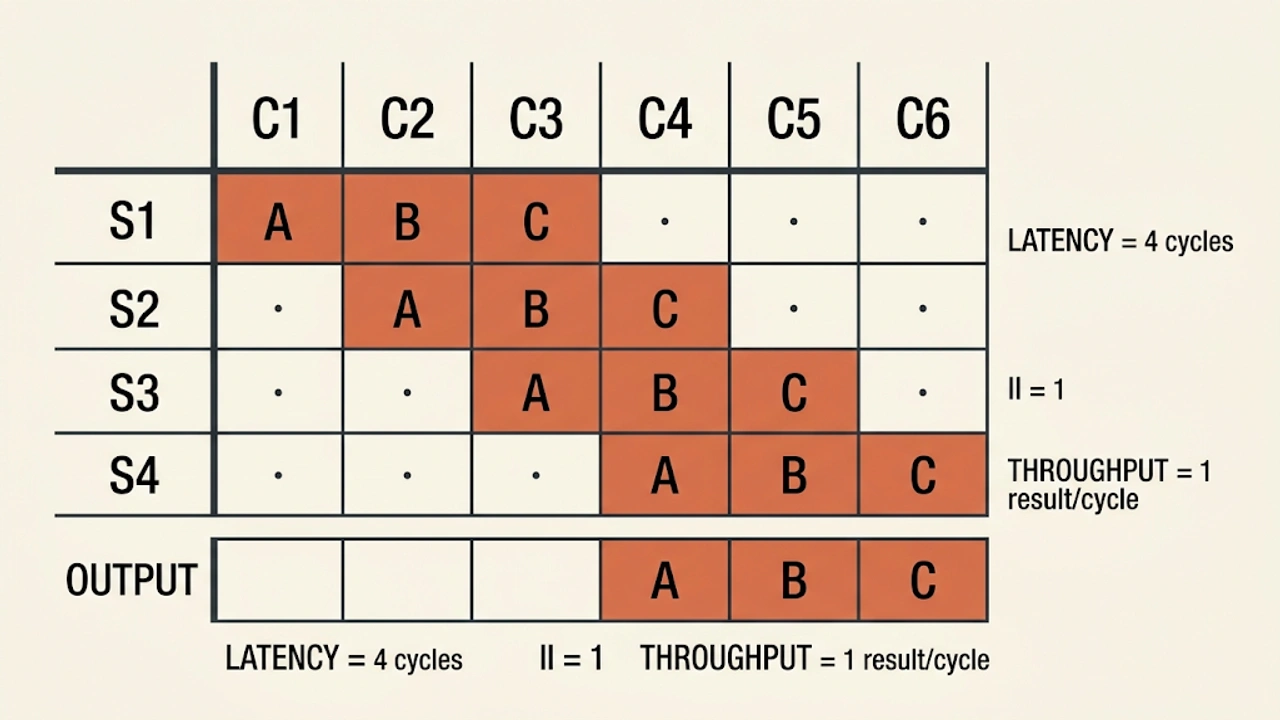
Pipeline Performance Analyzer teaching diagram
Teaching diagram for the Pipeline timing model used by this tool.
Common pitfalls

Do not treat a nominal value or a first-order model as proof that a real circuit will meet its tolerance, stability, thermal, timing, or signal-integrity requirements.

Engineering note

Use this result for learning and early planning. Confirm the final design with the relevant datasheet, simulation, measurement, layout review, and worst-case conditions.

FormulaCalculation basis
  • Use the displayed Pipeline timing relationship with consistent SI units. Keep the formula, unit conversion, and sign convention together when checking the result.
LimitsAssumptions & limits
  • Use this result for learning and early planning. Confirm the final design with the relevant datasheet, simulation, measurement, layout review, and worst-case conditions.